

The 39th African Union Summit kicks off in Addis Ababa amid complex regional and international circumstances that reflect both the ambitions and the growing challenges facing the continent.
This year’s summit is held under the theme: “Ensuring the Availability of Safe Water and Sanitation Systems to Achieve the Goals of Agenda 2063.” The theme places water security, environmental sustainability, and long-term development at the center of continental priorities. The gathering comes at a time marked by political tensions, ongoing armed conflicts, climate change pressures, rising economic strains, and the continuing dispute over the Grand Ethiopian Renaissance Dam (GERD), as Africa seeks to deepen economic integration and secure lasting peace and stability.
Executive Council Sets the Tone Ahead of Leaders’ Discussions
At the start of the annual proceedings, the African Union Executive Council — meeting at the level of foreign ministers — convened its 48th Ordinary Session. The session focused on key strategic files, including water security, peace and security issues, and political developments in several member states.
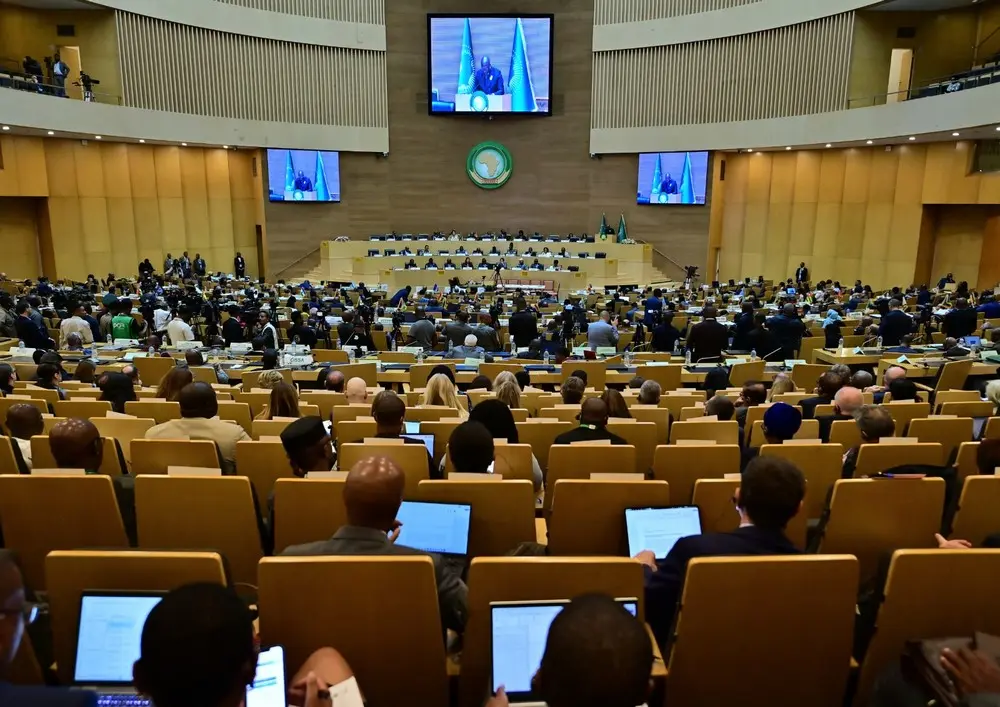
The discussions signaled the Union’s attempt to address critical matters at the ministerial level before placing them on the table for heads of state and government, ensuring a structured and coordinated approach to decision-making.
Addressing Ongoing Conflicts and Continental Crises
Held in Addis Ababa with the participation of several heads of state and high-level government delegations, the 39th Summit aims to confront multiple ongoing and renewed conflict hotspots across the continent.
Instability in the Sahel region continues to pose significant security concerns, while conflicts in the Horn of Africa have far-reaching consequences for food security and displacement. Sudan remains a particularly sensitive issue, as the country’s membership in the African Union remains suspended for the fifth consecutive summit, amid divisions over the conditions for its reintegration into the continental body.
These crises underscore the broader challenge of maintaining peace and constitutional order across the continent.
Italy–Africa Meeting Highlights Investment and Energy Transition
On the sidelines of the summit, the Italy–Africa meeting was held to promote European investment in Africa, with a focus on sustainable development and infrastructure projects.
Leaders emphasized Africa’s determination to build concrete partnerships capable of strengthening security cooperation and accelerating the energy transition across both the continent and the Euro-Mediterranean region.
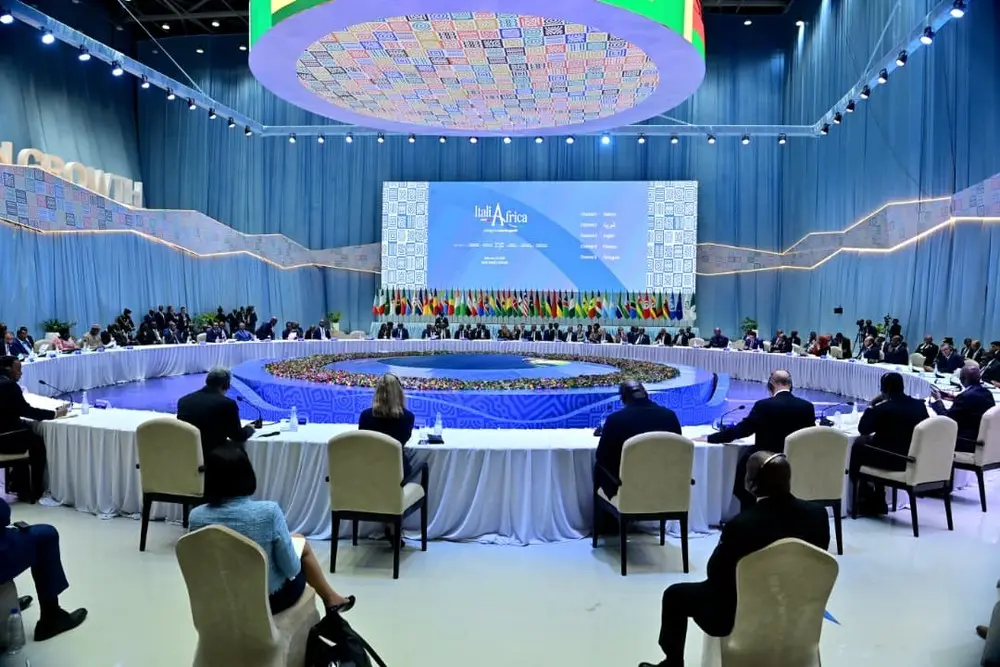
Algeria stressed the critical importance of mobilizing implementation tools — including financing, technology transfer, capacity building, and technical assistance — within a framework aimed at establishing a sustainable and mutually beneficial energy partnership.
Global Pressures and the Impact of Major Powers’ Policies
At the international level, foreign policy decisions by major powers — including the United States under President Donald Trump — have added further pressure to financing and investment flows toward Africa.
Policies such as the reassessment of foreign aid and the imposition of trade tariffs have fueled debate about their potential impact on African economies. These developments have reinforced calls within the continent for more balanced, diversified, and resilient international partnerships.
Saturday’s Agenda: Water Security, Peace, and Agenda 2063
According to Saturday’s schedule, the summit will include the official opening ceremony, the formal launch of the annual theme, and the presentation of the African Union Peace and Security Council’s annual reports.
Leaders are also expected to deliberate on strategies for sustainable water resource management, advancing peace initiatives, and accelerating the implementation of Agenda 2063 — the AU’s long-term blueprint for inclusive growth, deeper economic integration, and social transformation.
A Defining Test for African Leadership
While water security and environmental sustainability dominate this year’s agenda, the summit unfolds against a backdrop of persistent armed conflicts, unconstitutional changes of government in some states, and mounting global economic pressures.
Ultimately, the success of the 39th African Union Summit will be measured not by declarations alone, but by its ability to translate decisions into tangible outcomes on the ground — a defining test for African leadership at a pivotal moment in the continent’s history.


