

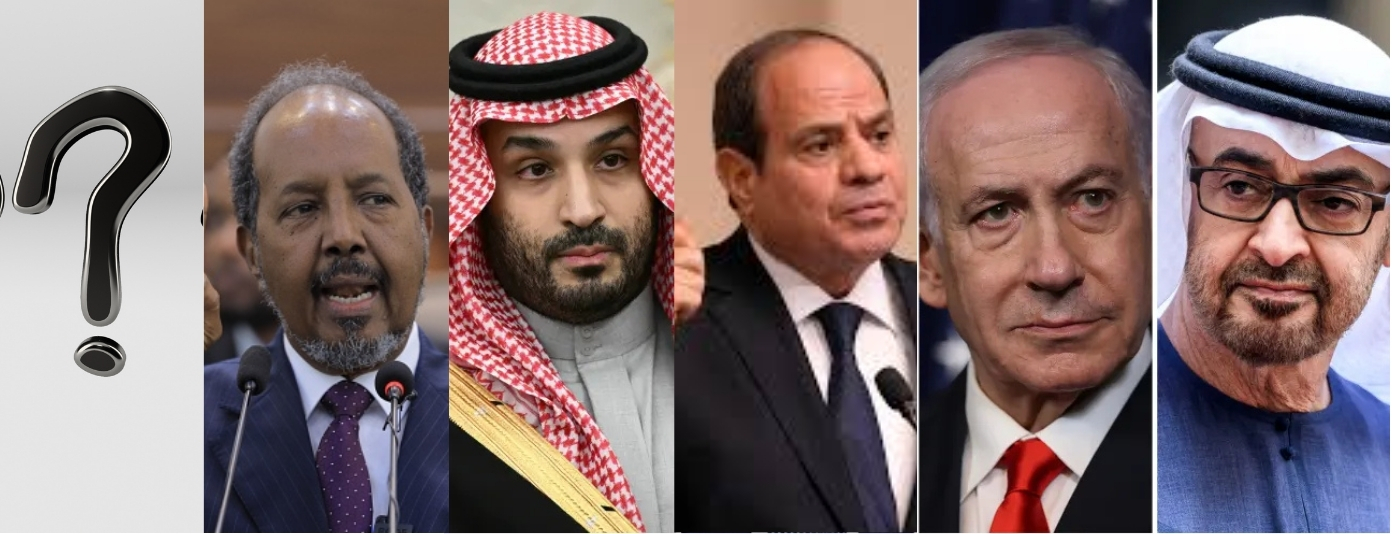
Hebrew media outlets reported Israeli occupation authorities’ concerns over a shift in the balance of regional alliances, following the emergence of international reports suggesting that Riyadh is seeking to establish a military alliance with Somalia and Egypt as part of efforts to strengthen its engagement in the Red Sea and Yemen. This move is seen as signaling an open confrontation with the UAE over influence, security, and the reshaping of a new regional order.
In an article titled “The Gulf War: Saudi and Egyptian Military Move Against the UAE and Israel,” the Hebrew-language newspaper Maariv placed the UAE and Israel side by side as allies, facing what it described as “a military alliance aimed at curbing the UAE’s influence across several regional arenas.”
The newspaper said, “Estimates suggest that the proliferation of military and security agreements with Saudi Arabia points to a growing trend toward establishing a joint Arab defense force as a counterweight to the influence of the UAE and Israel,” adding that “although Saudi Arabia and the UAE have shared quiet disagreements for years, experts believe the escalation of competition between them indicates a fundamental shift in the balance of power and the structure of alliances in the Middle East.”
Other Hebrew media outlets, citing a Bloomberg report, said the region is witnessing rapidly accelerating regional moves as Saudi Arabia begins to shape a new military alliance that includes Egypt and Somalia, as part of efforts to enhance security in the Red Sea and reduce the UAE’s influence in the area.
According to Hebrew media, Saudi military operations in Yemen and its characterization of the UAE’s role in the region as a “major threat” have directly affected Gulf relations—something the Hebrew press says “stands in sharp contrast to many years of coordinated and cautious rhetoric about Gulf unity,” noting that the rising competition between the two sides represents a fundamental shift in the balance of power and the structure of alliances in the Middle East.
Media affiliated with the Israeli occupation stated that “Riyadh’s pursuit of expanding its circle of regional partnerships to strengthen its presence in the Red Sea security equation is based on an approach centered on defense cooperation, intelligence sharing, and enhancing naval capabilities. Saudi Arabia is expected to soon receive the President of the Federal Republic of Somalia, Hassan Sheikh Mohamud, to finalize the agreement, which aims to strengthen strategic cooperation in Red Sea security, as well as deepen military cooperation.”
Through these Hebrew media reports, which highlighted the occupying entity’s fears over the expansion of Arab military alliances to include a joint defense force targeting it and the UAE, the question remains: how will this Arab state—“breaking away from the pack”—respond?


