



Algiers – AN-africa
Algeria, Tunisia and Egypt have renewed their categorical rejection of all forms of foreign interference in Libyan affairs, calling for the withdrawal of mercenaries, foreign fighters and foreign forces from the entire Libyan territory, and for the accelerated unification of the country’s military and security institutions.
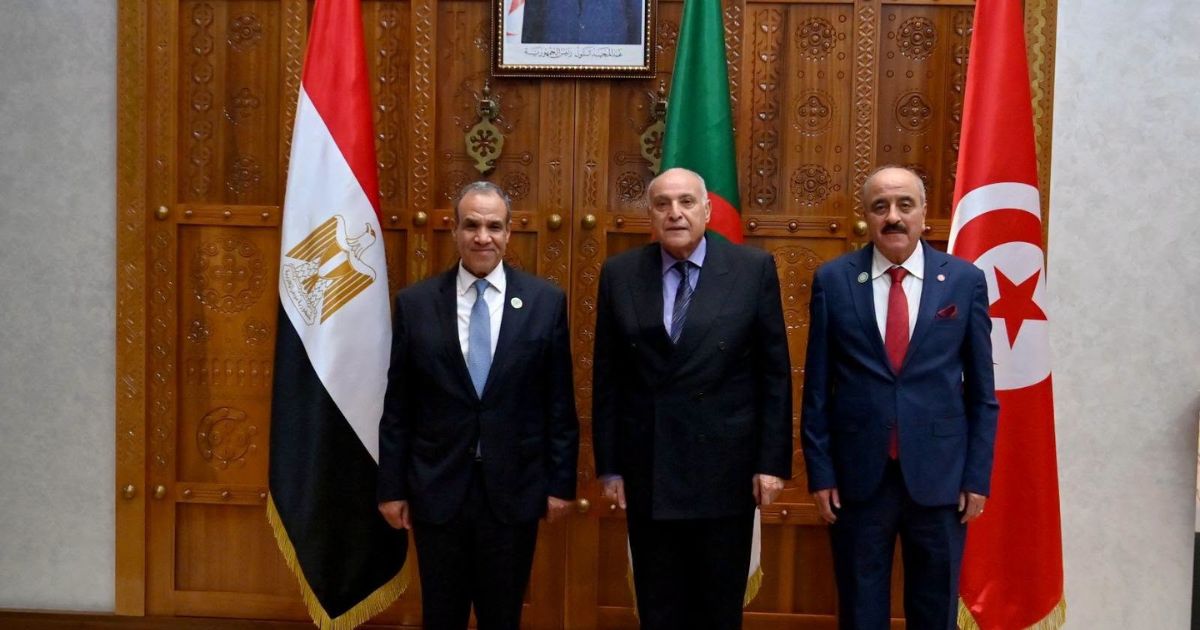
The position was set out in the final communiqué of a meeting of the foreign ministers of the three countries, held in Algiers on Sunday, 25 October 2026, under the trilateral mechanism for Libya’s neighbouring countries, according to a statement published by Algeria’s Ministry of Foreign Affairs.
According to the communiqué, the ministers reaffirmed their support for UN and international efforts to organise simultaneous, free and fair presidential and parliamentary elections under an agreed constitutional and legal framework. The process, they said, should bring an end to successive transitional phases and put an end to institutional division. They stressed that a political solution must be Libyan-led and stem from the will of the Libyan people, preserving the country’s unity, sovereignty and territorial integrity.
The ministers also underscored the importance of achieving national reconciliation in cooperation with the relevant Libyan authorities and the African Union, under UN auspices. They further called for the protection of Libya’s resources and frozen financial assets abroad, and for the country’s wealth to be used to serve the interests of its people and promote development.
The trilateral coordination comes amid persistent political and security challenges in Libya, with potential repercussions for stability across North Africa and the Sahel. The neighbours’ insistence on a central role in resolving the crisis raises questions about the extent of their determination to pursue a peaceful settlement in the face of foreign ambitions to maintain a military presence on Libyan soil, turn the country into a base for competing foreign military powers, and exploit the region’s wealth while undermining its security.
Will the neighbouring countries, in cooperation with the African Union, succeed in translating their common positions into concrete steps towards ending the crisis? And will African countries be able to strengthen their role in resolving the continent’s conflicts, or will such efforts remain constrained by internal divisions and competing international interests?
