



By Malika Melaikia | Translated by Anafrica
The 2026 Nobel Peace Prize, awarded to South African judge Navi Pillay, goes beyond individual recognition to highlight a legal career associated with pivotal milestones in the history of international justice, from resistance to the apartheid regime in South Africa to holding those responsible for the genocide in Rwanda accountable, through investigations into violations committed in the occupied Palestinian territories, and proceedings concerning allegations of genocide against the Rohingya minority in Myanmar.
The award comes amid heightened international tensions, as disagreements intensify over the role of international judicial institutions and the limits of holding states and leaders accountable for grave crimes. It has also brought renewed attention to the report of the United Nations Independent International Commission of Inquiry, chaired by Pillay, which concluded in September 2025 that the Israeli occupying entity had committed genocide in the Gaza Strip.
Between Africa’s celebration of the award and criticism from Zionist and American officials, Pillay has become the focus of a debate that goes beyond her professional career to encompass the future of international law and the ability of its institutions to fulfil their role amid political pressure.
African Union: Navi, Our Distinguished Daughter and a Source of Inspiration for African Women

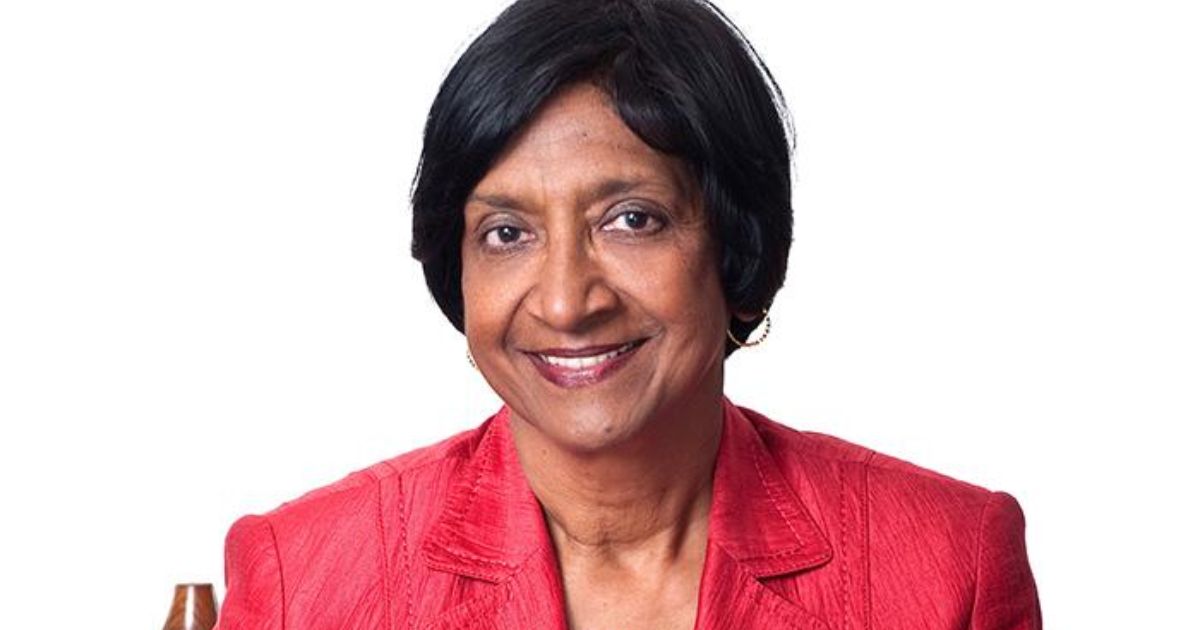
The African Union welcomed the awarding of the Nobel Peace Prize to Navi Pillay. The Chairperson of the African Union Commission, Mahmoud Ali Youssouf, described her as a distinguished daughter of the continent and said the honour was a source of pride for Africa, particularly for African women and girls.
Youssouf praised her career, which extended from the struggle against apartheid in South Africa to her work at the International Criminal Tribunal for Rwanda and the International Criminal Court, and then to her responsibilities within the United Nations. He considered her experience an embodiment of the contribution of African women to international leadership and the consolidation of justice and human rights.
The African position reflects recognition of a career associated with the development of accountability mechanisms for genocide, crimes against humanity and conflict-related sexual violence, at a time when multilateral institutions face growing challenges.
Anger in the White House and the “House of Genocide”
The announcement of the award did not pass without political criticism, particularly in the Israeli occupying state and the United States, against the backdrop of Pillay’s positions on the war in Gaza and her role as chair of the UN commission of inquiry that concluded that (Israel) had committed genocide in the territory.
In Washington, US President Donald Trump played down Pillay’s significance, saying he had never heard of her before and describing her as an unknown figure. He also criticised the Nobel Committee’s decision, considering the failure to award him the prize an insult to Norway.
Trump escalated his confrontation with the International Criminal Court, in a move that revived debate over the pressure facing institutions tasked with pursuing international crimes.
These positions reveal a widening gap between the independence of international judicial institutions and the decisions of senior political leaders. Supporters of the award believe that honouring Pillay highlights the importance of protecting international law from pressure, particularly when cases involve powerful states or parties with considerable political and military influence.
South Africa and Palestine: The Legacy of Apartheid Confronts Genocide
What makes this pride all the more significant is that South Africa, in its own name and in the name of the continent reflected in its name, has been involved from the outset in defending the Palestinian people and hauled the Israeli occupying state before the International Court of Justice, in an unprecedented step to hold it accountable before international justice over allegations of committing genocide in the Gaza Strip.
Pretoria did not act alone. Other African countries stood alongside it, maintaining their positions in support of Palestinian rights amid political and diplomatic pressure accompanying efforts to hold the Israeli occupation accountable. In this way, South Africa brought the legacy of its struggle against apartheid to the international justice arena, placing the Palestinian cause at the heart of a broader battle for accountability and an end to impunity.
In December 2023, South Africa filed a case before the International Court of Justice, accusing the Israeli occupation of violating the Convention on the Prevention and Punishment of the Crime of Genocide. The Court subsequently issued provisional measures in the case, but it has not yet delivered a final judgment on the substance of the allegations.
Pillay, meanwhile, chaired the United Nations Independent International Commission of Inquiry on the Occupied Palestinian Territory until 2025. The commission’s report, issued in September of that year, concluded that the occupation had committed genocide in Gaza, based on an analysis of acts falling under the provisions of the Genocide Convention.
Nobel Peace Prize Returns to Mandela’s Homeland for the Fifth Time
In South Africa, Pillay’s victory was welcomed by officials and the public. President Cyril Ramaphosa considered the award recognition of a career dedicated to promoting peace and international law, while also recalling the country’s history of resistance to racial discrimination.
Pillay became the fifth South African to receive the Nobel Peace Prize, following Albert Luthuli, who won it in 1960; Desmond Tutu in 1984; and Nelson Mandela and Frederik de Klerk, who shared the award in 1993 in recognition of their roles in ending the apartheid regime and the transition towards democracy.
The award carries particular significance for Mandela’s homeland, which has moved from a history of racial discrimination to using international judicial mechanisms in human rights and accountability cases. It also draws renewed attention to the role of law in confronting systems of exclusion in international conflicts.
Navi Pillay: From Durban to International Courts
Navanethem “Navi” Pillay was born on 23 September 1941 in Durban, South Africa, to a family of Indian Tamil origin. She grew up under the apartheid regime, which imposed racial discrimination on the country’s non-white population.
She studied law and began practising as a lawyer in the 1960s. In 1967, she became the first woman to establish a law practice in the province of Natal. During the apartheid years, she defended anti-apartheid activists, and her work was associated with the defence of political and civil rights in an environment that imposed sweeping restrictions on the majority of the population.
In 1995, she was appointed a judge of the High Court of South Africa before moving into international judicial work. She served as a judge and then president of the International Criminal Tribunal for Rwanda, and later as a judge at the International Criminal Court between 2003 and 2008.
She also served as United Nations High Commissioner for Human Rights from 2008 to 2014, working on human rights, equality and the protection of groups most vulnerable to violations. Between 2021 and 2025, she chaired the United Nations Independent International Commission of Inquiry on the Occupied Palestinian Territory and the Israeli occupation, in addition to serving as an ad hoc judge at the International Court of Justice in the case of The Gambia v. Myanmar.
Rwanda and the Rohingya: Milestones in the Journey Towards International Justice
Rwanda was one of the most prominent chapters in Pillay’s career. She joined the International Criminal Tribunal for Rwanda, which was established to prosecute those responsible for the 1994 genocide and related serious violations, and subsequently served as the tribunal’s president between 1999 and 2003.
Her role in the case against Jean-Paul Akayesu, the former mayor of Taba, was particularly significant. The judgment delivered in 1998 marked a historic legal development by recognising that rape and sexual violence could constitute acts of genocide if committed with the intent to destroy, in whole or in part, a protected group.
The case represented a turning point in recognising sexual violence as a tool that could be used to carry out genocide. It also contributed to the development of international criminal law and accountability for those responsible for grave crimes.
Palestine, South Africa and Rwanda were not the only arenas in which Navi Pillay pursued justice. Her role also extended to the Rohingya case in Myanmar, through her service as an ad hoc judge at the International Court of Justice in the case brought by The Gambia against Myanmar, concerning allegations of genocide against this minority.
The Gambia accuses Myanmar of violating the Genocide Convention over operations targeting
